For a long time, I believed the secret to getting great AI answers was writing the “perfect prompt.”
So I kept adding more words.
More instructions.
More details.
More examples.
Ironically, my prompts became longer while the results barely improved.
The turning point came when I stopped trying to impress the AI and started communicating with it more clearly.
That’s when I realized good prompting isn’t about writing more—it’s about thinking better.
The Biggest Mistake Most People Make
Open ChatGPT, Claude, or Gemini and you’ll notice one common pattern.
Most people ask AI the same way they search Google.
“Write a blog about SEO.”
“Create a marketing plan.”
“Build a website.”
Technically, these prompts work.
But they force the AI to guess what you actually want.
The more guessing involved, the more generic the answer becomes.
Instead of expecting AI to read your mind, treat it like a teammate who needs clear instructions before starting the job.
Think About the Outcome First
One habit has improved my prompts more than anything else.
Before I type a single word, I ask myself:
What should the final result look like?
Once I know the answer, writing the prompt becomes much easier.
Rather than asking AI to “write an article,” I explain who the audience is, how long it should be, the tone I want, and what readers should learn before they finish reading.
That extra minute usually saves twenty minutes of editing later.
Give Direction, Not More Words
Many beginners believe longer prompts automatically produce better answers.
That hasn’t been my experience.
A clear, focused prompt often outperforms a massive wall of text.
AI doesn’t need unnecessary information.
It needs useful information.
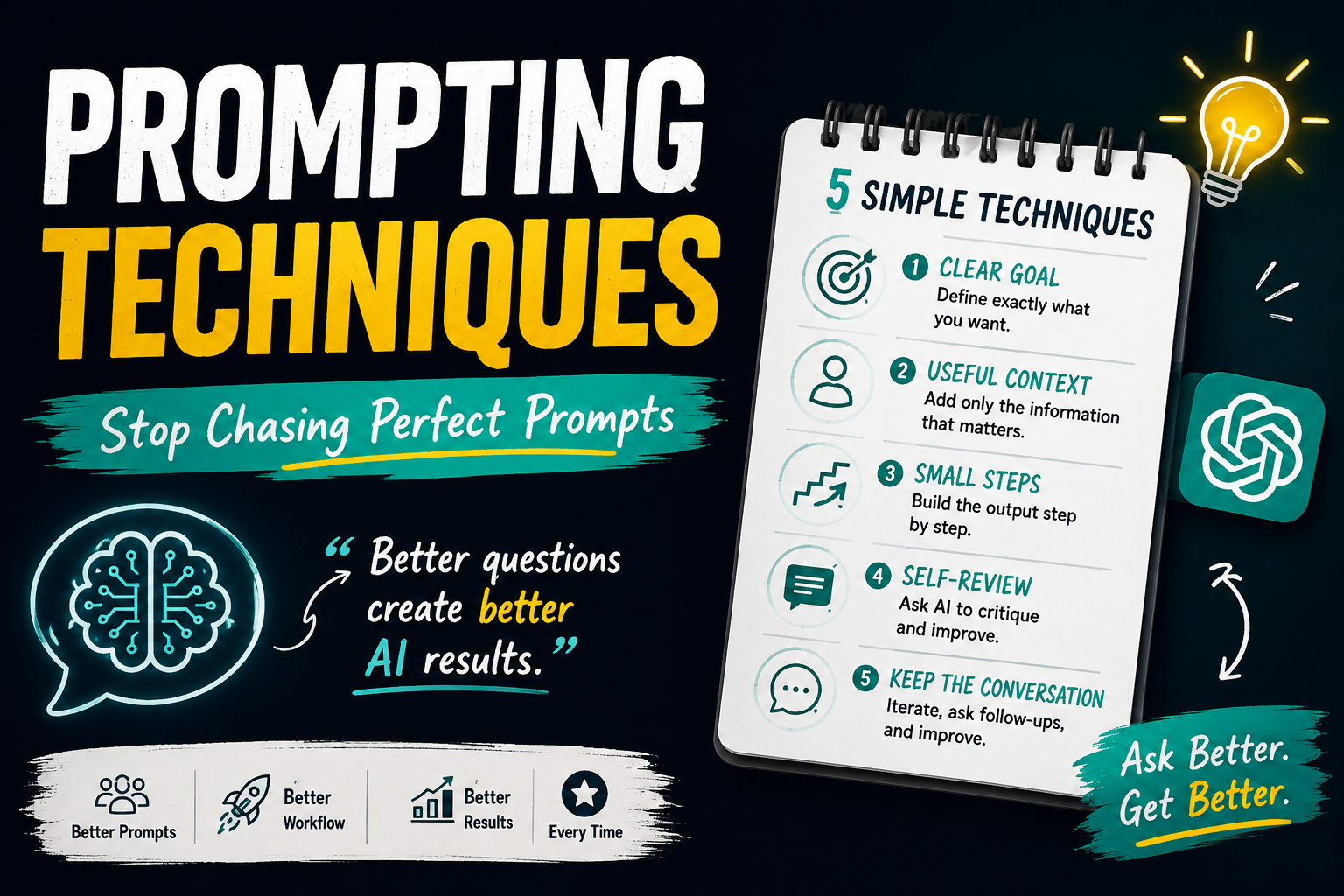
Who is the audience?
What’s the goal?
What should the output include?
What should it avoid?
Those four questions are often enough to transform an average response into a useful one.
Keep Improving Instead of Starting Over
Another lesson I learned is that the first response is rarely the final one.
Experienced AI users don’t open a new chat every time something feels wrong.
They improve the conversation.
They ask for better examples.
They request simpler explanations.
They remove weak sections.
Each response becomes the starting point for the next improvement.
That’s where the real magic happens.
Final Thoughts
Prompting isn’t a secret skill reserved for AI experts.
It’s simply the ability to explain what you need with clarity.
The next time an AI tool gives you an average answer, don’t immediately blame the model.
Look at the prompt first.
A small improvement in the way you ask the question often creates a much bigger improvement in the answer you receive.
Better AI results rarely come from longer prompts.
They come from clearer thinking.